
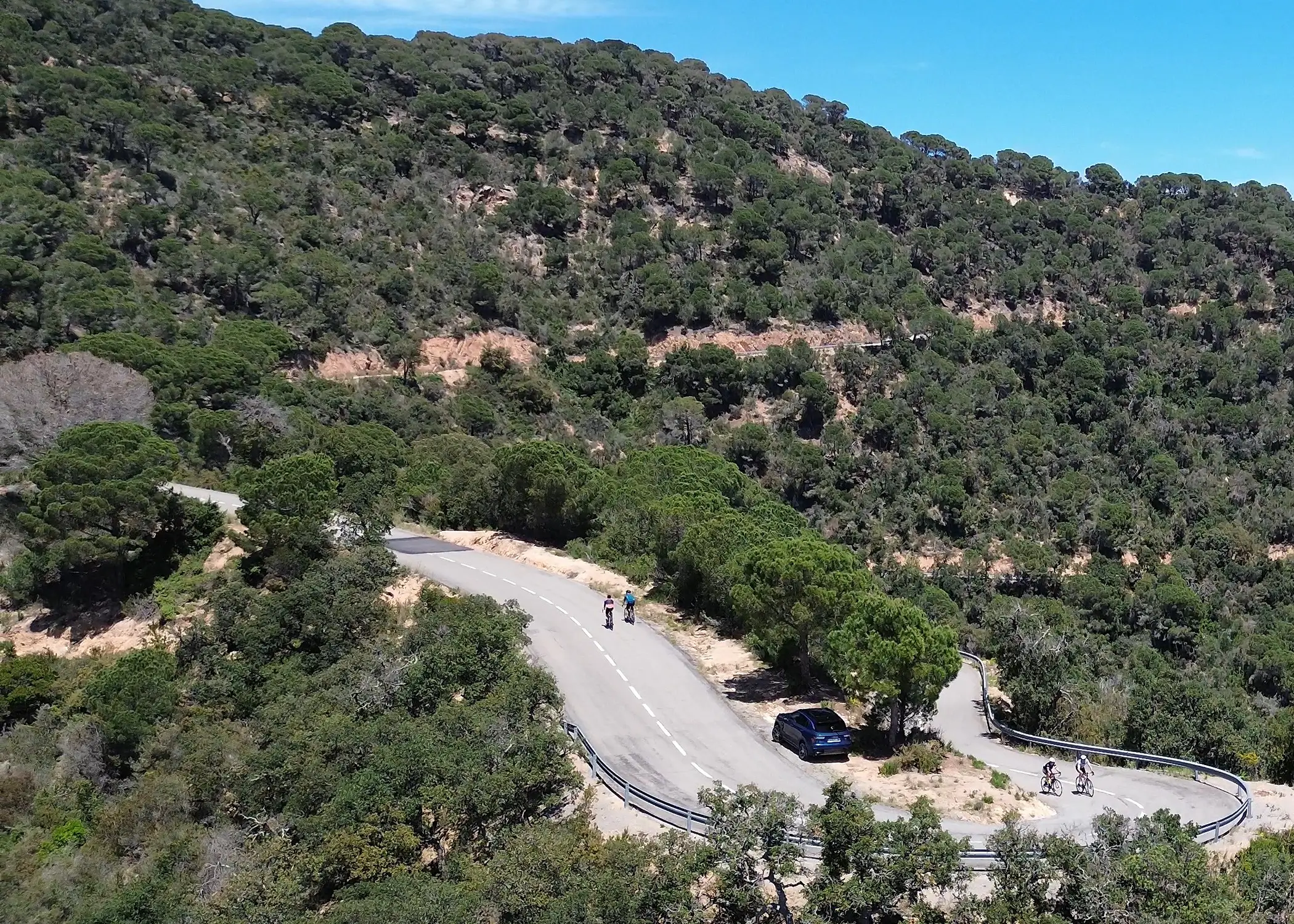
Ask most people when to ride Málaga, and you’ll get one word back. Winter. They’re not wrong. But it’s only half the story.
Málaga is one of the best winter cycling bases in mainland Europe. It also rides beautifully in spring and autumn, and it’s ok in the summer if you respect the heat. Each season here has its own character. Each one rewards a different kind of rider and a different kind of trip. This guide walks through them month by month, with real numbers and the local detail the weather sites miss. We ride and coach here all year, so this is what we actually plan around.
The short answer
If you just want the headline, here it is.
- Winter (November–March). The main event. Mild, sunny, and quiet on the roads. The reason riders fly in.
- Spring (April–May): The best all-round window. Warm, green, long days.
- Autumn (September–October). Warmer than spring and underrated. The sea and rock still hold summer’s heat.
- Summer (June–August): Ride at dawn or skip the middle of the day. Beautiful, but hot inland.
The rest of this guide explains why and how to ride each one well.
Why the climate works for cyclists
Málaga sits in a sweet spot. It’s at the southern tip of Europe, so it’s close to the equator and warm. It’s also tucked between a mountain range and the sea, which keeps the climate mild and stable. The result is one of the warmest, sunniest cities on the mainland. Around 300 days of sun a year. Roughly 480–500 mm of rain, most of it falling in short bursts between November and March. Not all-day grey.
That mix is why the pros come. Tour de France winner Jonas Vingegaard has based himself near here. And the wider south of Spain fills with professional and amateur riders every winter. They’re chasing the same thing you are. Dry roads, warm air, and climbs you can train on in January.
Winter (November–March). The main event
Daytime highs: 16–20°C. Nights: around 8–10°C. Sunshine: 5–6 hours a day in midwinter, climbing through spring. Rain: the wettest stretch of the year, but it comes in short bursts.
This is why most riders come, and it’s hard to beat. While home is grey and freezing, you’re riding in the sun in shorts. The roads are quiet. The climbs are open. And the city is calm before the summer crowds arrive. It’s the perfect time to escape the turbo and put in real outdoor base miles.
The temperature swing between climbing and descending is bigger than you’d think. You’ll be warm grinding up Puerto del León. Then genuinely cold on the fast drop from 900 m. Carry a packable jacket and you’ll be glad of it on every descent. Down at the beach afterwards, you’ll be peeling layers off again.
December is the quietest and coolest, with the shortest days. January and February are the classic training-camp months. By March, the light is stretching out, the orange blossom is in the air, and it already feels like spring is coming.

Spring (April–May). The all-rounder
Daytime highs: 19–24°C. Nights: 11–14°C. Rain: just a few days a month. Daylight: long and getting longer.
For many riders, this is the sweet spot. The temperatures are perfect for big efforts. The days are long enough for proper distance. And the landscape is at its greenest before summer dries it out. You get warm, dry riding without the heat of high summer or the short days of winter. It’s the best window for back-to-back days and longer routes like the El Torcal loop.
If you want one season to do everything, from a full day in the mountains to an easy coastal spin, spring is the safe pick.
Autumn (September-October). The underrated one
Daytime highs: 22–27°C. Nights: 14–18°C. Rain: low in September, rising into late October. Sea: still warm from summer.
Here’s the thing people get wrong. Autumn often rides warmer than spring. The sea and mountains keep their summer warmth, so September often feels like summer without the big crowds. October eases off but still gives you outdoor lunches and warm afternoons.
It’s a superb window and a quiet one. Warm enough for everything, with the bonus that the worst of the summer heat has passed. The only watch-out is late October, when the first real rain of the season starts to return.
Summer (June–August). Ride early or skip the middle
Daytime highs: 28–32°C on the coast, hotter inland. Nights: 19–22°C. Rain: almost none. Sea: warm, up to 24°C.
Summer is dry and reliable, but it’s hot, and inland it’s hotter still. The coast stays manageable thanks to the sea breeze. The climbs do not. Riding at midday in July or August becomes a heat-management task rather than a joy.
The fix is simple. Ride at dawn. Finish the ride before the sun is high. Come back by late morning, then enjoy the worst of the afternoon at the beach or in the shade. Ridden that way, summer is still excellent. Just don’t fight the middle of the day.
The wind nobody warns you about
Málaga has a local wind called the Terral. It blows offshore, off the hot land rather than the cool sea, and it can change the temperature dramatically in hours. In summer it’s the villain. A Terral day can push the city well past its normal highs and make riding genuinely risky. In winter it flips. The same wind can bring an unusually warm, calm day in January. It’s the sort of day when you can ride in summer gear and hardly believe it.
The general pattern shows calmer conditions inland and at higher altitudes. It’s breezier on the coast, with afternoon crosswinds along the seafront during high season. So the coast road is best ridden early. And the climbs, sheltered and quieter, are the heart of riding here whatever the season. Check the forecast for a Terral before a big summer day. It’s the one thing that turns a great plan into a bad idea.
So when should you come?
It depends on what you’re after. A few honest steers.
- Winter sun and base miles: November to March. Escape the cold and train in shorts.
- Perfect all-round riding: April, May, September, October. Warm, dry, long days, fewer crowds.
- The biggest mountain days: spring or autumn, when it’s warm but not baking.
- A summer trip: any time, as long as you ride early and treat the afternoon as rest.
There’s no bad time to ride Málaga. There’s just a right time for the trip you want. Tell us what you’re training for, and we’ll tell you when to come.
Thinking about when to ride Málaga? Malaga Cycling Holidays – coach-led, no-drop, and timed to get the best out of the season you choose.
Related reading: Cycling in Málaga: A Coach’s Guide to Riding the Costa del Sol · The Best Climbs in Málaga ·
Leave a Reply