
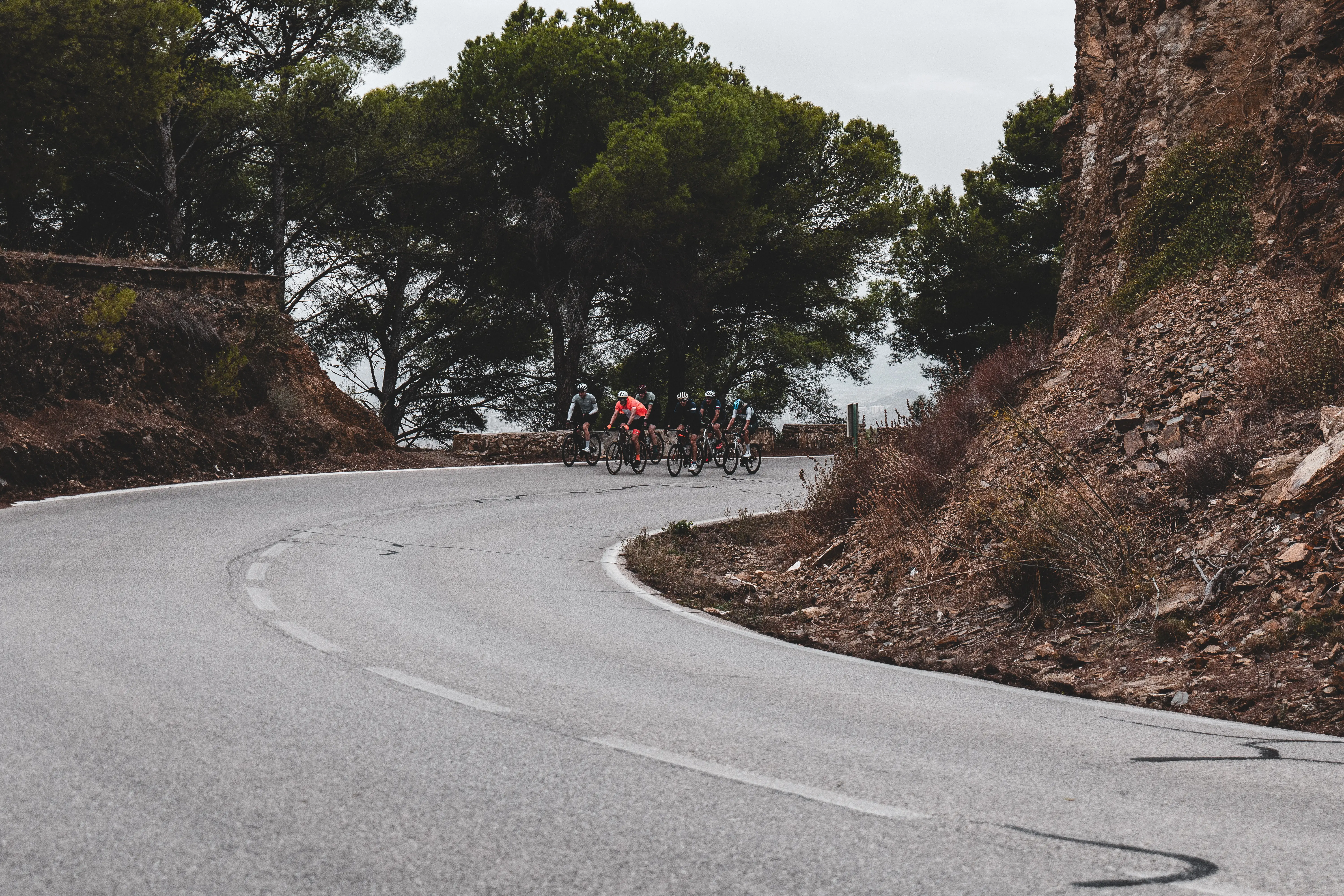
Most guides treat Málaga as a beach city with an airport. Riders know better. This is a place where a serious climb starts ten minutes from the cathedral, where the coffee is good and the evenings are long, and where a rest day can mean a Picasso gallery rather than another hour on the bike.
This guide is for the rider planning a trip in the city. Where to stay so you can roll out easily. Where to eat that suits both training and treating yourself. What to do on the day your legs need a break. And how to get around without a car. It is a proper city guide. It just happens to be written by people who ride here.
Why base yourself in the city
Plenty of cycling trips bury you in a resort up the coast or a quiet inland hotel. Málaga city is the opposite. You get the climbs and the culture from the same front door.
The riding reaches you fast. Puerto del León, the city’s benchmark climb, begins barely ten minutes north of the centre. The quiet roads of the Montes de Málaga open up soon after. And when you want a flat day, the coast runs east and west right from the seafront. Off the bike, you have a walkable old town, a proper food scene, galleries, and a beach to lie on. For a group with mixed appetites, riders and non-riders both, that mix is hard to beat.
Discover our Performance Trip: Malaga Cycling Holiday.
Where to stay
Pick your neighbourhood for how you want the day to start and end. Here are the areas that work best for a rider.
Centro Histórico. The heart of it
The old town puts you among the cathedral, the tapas bars and the galleries, all on foot. Evenings are the draw, with dinner and a stroll a step from your door. The trade is that it is busy and the streets are tight, so getting a bike in and out at peak times takes a little patience. Best if evenings and atmosphere matter most to you.
Soho. Walkable and a little calmer
Just south of the centre, Soho is the arts quarter, with street murals and a good few cafes. It is close to everything but a touch quieter than the old town, and it is where Cyclemalaga keeps its shop, which is handy for hire and last-minute spares. A solid all-rounder.
La Malagueta and the seafront. Roll straight out
If your ideal morning is a flat warm-up by the sea, base yourself near La Malagueta beach. You roll straight onto the coastal road, and you are back to the sand and a swim the moment you finish. It is a short walk into the centre for dinner. Best for easy access to the flat coastal riding and recovery by the water.
A note on bikes in your room
Whatever the area, message the hotel before you book and ask where the bikes will sleep. A surprising number of central places will find a store room or let a bagged bike come up to the room if you ask nicely. The ones used to cyclists say yes without blinking. That single email saves a lot of grief on arrival.
Coffee and food for cyclists
Spain runs on good coffee, and Málaga is no exception. The rhythm of a riding trip here is simple. Caffeine before you roll, carbohydrate on the way round, and a proper feed at night.
The pre-ride coffee
Order like a local. A café con leche is your flat white. A cortado is a small, strong shot with a little milk, ideal before you clip in. The speciality scene is good too, with several third-wave roasters in Soho and the centre if you want a single-origin pour before a big day. Most open early enough for a sensible start, though for a dawn rollout, you may be brewing your own.
Fuel on the bike
Out in the Montes de Málaga and the white villages, the village bar is your friend. A tostada con tomate, toast rubbed with tomato and good olive oil, is the classic mid-ride plate, cheap and exactly what you want. Carry your own gels for the long climbs, where the cafes thin out, but plan a stop in a village and you will eat well for a few euros.
Dinner, and eating late
The one thing to know. Spain eats late. Many kitchens do not get going until 8.30 or 9pm, which can be a stretch after a long day when you are starving by seven. Two ways round it. Lean on tapas earlier in the evening to bridge the gap, or eat in the more tourist-facing spots that serve through the afternoon. For recovery, Málaga makes it easy. Fresh fish and seafood by the water, rice dishes, jamón, and vegetables that actually taste of something. The espetos, sardines grilled on a skewer over an open fire, are a Malagueta institution and worth the trip on their own.

Rest days and time off the bike
A good rest day is part of the training, not a break from the trip. Málaga is unusually well set up for it, which also makes it kind to any non-riding partners in the group.
Culture, at a walking pace
Málaga is Picasso’s birthplace, and the Museo Picasso in the old town is the obvious draw. The Carmen Thyssen covers Spanish painting, and the Centre Pompidou outpost by the port handles the modern stuff. None of it asks much of your legs, which is the point on a rest day.
History and a gentle climb on foot
The Alcazaba, a Moorish fortress rising from the old town, is the city’s standout sight, with the Roman theatre at its foot. Above it sits the Gibralfaro castle, and the walk up rewards you with the best view over the city and the port. It is a stroll, not a slog, and a fine way to keep moving without loading the legs.
Doing very little, well
Sometimes recovery just means a flat white, a paseo along the Muelle Uno promenade, and an afternoon on La Malagueta beach with your legs up. A gentle swim in the sea does more for tired muscles than another hour indoors. And the Atarazanas market is worth an hour for the produce alone, a good place to grab fruit and snacks for the next day’s ride.
Getting there and getting around
One of Málaga’s quiet advantages is how little you need a car.
From the airport, the city centre is a short hop. The C1 cercanías train runs to the central Málaga Centro-Alameda station in about twelve minutes, which is the easy choice if you are travelling light. With a bagged bike, a taxi or pre-booked transfer is simpler, since space on the train is tight at busy times. Either way you are at your hotel quickly.
Once you are in, the centre is walkable end to end, so you will not need transport between dinner and your hotel. For the riding itself, the whole appeal is that you leave from the door. No shuttle, no drive to the start. Just clip in and go.
How a week in the city tends to flow
Put it together and a typical trip falls into an easy rhythm. A coffee and a flat warm-up along the coast to open the legs. A couple of big days up Puerto del León and out into the Montes de Málaga. A rest day for the Alcazaba, a gallery and the beach. Then a final ride before a long dinner of fresh fish by the water. Climbs and culture, from the same front door. That is the case for the city.
Ride Málaga with us
Our coach-led trips put you in the right base, on the right roads, with the city on your doorstep for the evenings and rest days. You ride. We handle the logistics, the routes and the local know-how. Tell us what you are after and we will help you plan it.
Related reading
- Cycling in Málaga: A Coach’s Guide to Riding the Costa del Sol
- The Best Climbs in Málaga
- The Best Time of Year to Cycle in Málaga
- Bike Rental in Málaga: An Honest Comparison